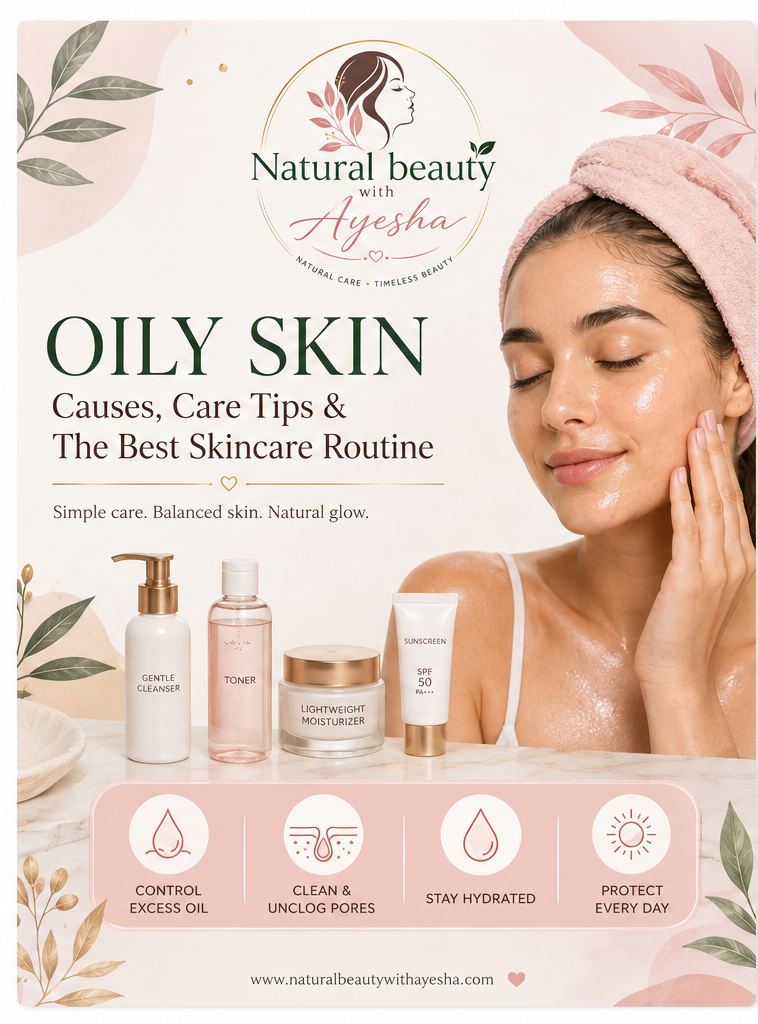
Causes, Care Tips & the Best Skincare Routine
Oily skin is one of the most common skin types. It happens when the sebaceous glands produce more sebum (natural oil) than the skin needs. While sebum helps keep the skin soft and protected, excess oil can make the face look shiny and may contribute to clogged pores, blackheads, and breakouts.
At Natural Beauty with Ayesha, we believe that oily skin does not need to be stripped of all its natural oils. The goal is to maintain a healthy balance with a simple and consistent skincare routine.
What Causes Oily Skin?
Several factors can contribute to excess oil production, including:
- Genetics and naturally oily skin
- Hormonal changes
- Stress
- Hot and humid weather
- Using harsh skincare products
- Over-washing or scrubbing the skin
- Using products that are too heavy for your skin type
Understanding what triggers your oiliness can help you choose a skincare routine that works better for your skin.
Common Signs of Oily Skin
You may have oily skin if you notice:
- A shiny appearance, especially on the forehead, nose, and chin
- Enlarged or more visible pores
- Frequent blackheads or whiteheads
- Makeup becoming oily or wearing off quickly
- Occasional or frequent breakouts
How to Care for Oily Skin
1. Cleanse Gently
Wash your face with a gentle cleanser that removes excess oil, dirt, and impurities without leaving your skin feeling tight or irritated. Washing too aggressively can disrupt the skin barrier and may make your skin feel even more uncomfortable.
2. Don’t Skip Moisturizer
One of the biggest skincare mistakes people with oily skin make is avoiding moisturizer. Oily skin still needs hydration.
Choose a lightweight, non-comedogenic moisturizer that feels comfortable on your skin without making it excessively greasy.
3. Use Sunscreen Every Day
Sunscreen is an essential part of every skincare routine. Choose a lightweight, non-comedogenic sunscreen with broad-spectrum protection and apply it every morning.
4. Avoid Excessive Scrubbing
Scrubbing your face too often can irritate the skin. Instead, focus on gentle cleansing and use exfoliating products carefully and according to your skin’s tolerance.
5. Choose Products Carefully
Look for products described as:
- Lightweight
- Oil-free
- Non-comedogenic
- Suitable for oily or combination skin
Remember that a product being labeled “natural” does not automatically mean it is suitable for every skin type.
Simple Oily Skin Routine
Morning:
- Gentle cleanser
- Lightweight moisturizer
- Broad-spectrum sunscreen
Evening:
- Gentle cleanser
- Appropriate treatment product if needed
- Lightweight moisturizer
Consistency is usually more helpful than using a large number of skincare products.
Ingredients That May Help Oily Skin
Depending on your individual skin needs, ingredients such as niacinamide, salicylic acid, and hyaluronic acid may be useful.
- Niacinamide can help support the skin barrier and may help reduce the appearance of excess oil.
- Salicylic acid can help exfoliate inside pores and may be useful for clogged pores and acne-prone skin.
- Hyaluronic acid helps attract and retain moisture without necessarily making the skin feel oily.
Introduce active ingredients gradually and stop using a product if it causes significant irritation.
Natural Beauty Tip
If your skin becomes oily during the day, resist the temptation to repeatedly wash your face. Instead, gently remove excess oil with a clean tissue or blotting paper and continue with your normal routine.
Final Thoughts
Oily skin can be healthy and beautiful. The key is not to remove every trace of oil but to maintain a balanced skincare routine that keeps the skin clean, hydrated, and protected.
With the right products and consistent care, you can help manage shine, clogged pores, and breakouts while maintaining a healthy-looking complexion.
Natural Beauty with Ayesha — Simple care, healthy skin, natural confidence.
Disclaimer: Skincare needs vary from person to person. If you have persistent, painful, or severe skin problems, consider consulting a qualified dermatologist.