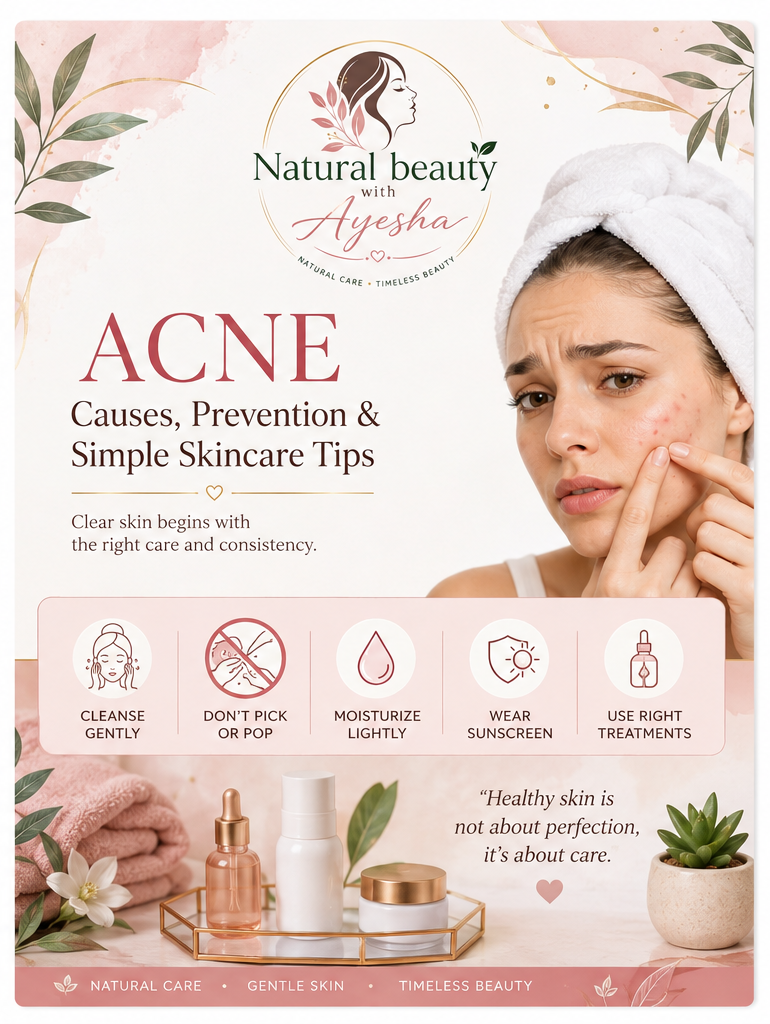
Causes, Prevention & Simple Skincare Tips
Acne is one of the most common skin concerns and can affect people of different ages. It may appear as blackheads, whiteheads, pimples, or deeper and more painful spots.
Although acne is common, it can sometimes affect confidence and self-esteem. The good news is that a consistent and gentle skincare routine can help manage acne-prone skin.
At Natural Beauty with Ayesha, we believe that healthy skin starts with understanding your skin and choosing products carefully.
What Is Acne?
Acne develops when hair follicles become clogged with oil and dead skin cells. Bacteria, inflammation, and hormonal changes can also contribute to the development of acne.
Acne commonly appears on the:
- Face
- Forehead
- Chest
- Back
- Shoulders
The severity and appearance of acne can vary from person to person.
What Causes Acne?
Several factors may contribute to acne, including:
Hormonal Changes
Hormonal fluctuations can increase oil production and contribute to clogged pores. This is why acne is particularly common during adolescence and may also occur during other periods of hormonal change.
Excess Oil
When the skin produces excess sebum, it can combine with dead skin cells and contribute to blocked pores.
Clogged Pores
Dead skin cells and oil can accumulate inside hair follicles, creating an environment where acne lesions can develop.
Bacteria and Inflammation
Changes in the skin’s microbial environment and inflammation can contribute to the development and persistence of acne.
Stress
Stress does not necessarily cause acne on its own, but it may worsen acne for some people.
Different Types of Acne
Acne can appear in several forms:
Whiteheads: Closed clogged pores that appear as small bumps.
Blackheads: Open clogged pores that appear dark because of changes in the material inside the pore—not simply because of dirt.
Papules: Small, raised, inflamed bumps.
Pustules: Inflamed spots containing visible pus.
Nodules and cyst-like lesions: Deeper, often painful acne that may require professional treatment.
How to Build an Acne-Friendly Skincare Routine
1. Cleanse Gently
Wash your face with a gentle cleanser, particularly after sweating. Avoid harsh scrubbing because irritation can make acne-prone skin more uncomfortable.
2. Don’t Pick or Squeeze Pimples
It can be tempting to squeeze a pimple, but doing so can increase inflammation and may increase the risk of marks or scarring.
Let your skincare routine do the work instead.
3. Keep Your Skin Moisturized
Acne-prone skin still needs hydration. Choose a lightweight, non-comedogenic moisturizer that suits your skin type.
4. Wear Sunscreen
Sun protection is important for everyone, including people with acne-prone skin. A lightweight, non-comedogenic broad-spectrum sunscreen can help protect your skin from UV exposure.
5. Introduce Acne Treatments Carefully
Ingredients such as salicylic acid, benzoyl peroxide, and adapalene can be used in acne treatment, depending on the individual’s needs and circumstances.
Don’t introduce several strong active ingredients at the same time. Start gradually and monitor how your skin responds.
What About Natural Remedies?
Many people prefer natural skincare ingredients such as aloe vera, honey, or green tea. However, “natural” does not automatically mean “safe for acne” or “better for the skin.”
Avoid applying harsh ingredients such as lemon juice, baking soda, toothpaste, or undiluted essential oils to acne. These can irritate the skin and potentially make the problem worse.
If you want to use botanical or natural products, choose well-formulated products designed for facial skin and patch-test new products when appropriate.
Lifestyle Habits for Healthier Skin
Skincare is only one part of taking care of your skin. Helpful habits may include:
- Keep your hands away from your face as much as possible.
- Clean makeup brushes regularly.
- Remove makeup before sleeping.
- Change pillowcases regularly.
- Avoid using excessively greasy hair or skincare products on acne-prone areas.
- Maintain a balanced diet and overall healthy lifestyle.
- Get adequate sleep and manage stress where possible.
When Should You See a Dermatologist?
Consider professional advice if your acne is:
- Painful or severe
- Leaving scars or persistent dark marks
- Getting worse despite a consistent skincare routine
- Affecting your confidence or daily life
- Not improving with over-the-counter products
A dermatologist can identify the type and severity of acne and recommend an appropriate treatment plan.
Final Thoughts
Acne does not mean your skin is dirty, and having acne is nothing to be ashamed of. It is a common skin condition influenced by several factors, including oil production, clogged pores, hormones, inflammation, and genetics.
The best approach is usually gentle cleansing, appropriate hydration, sun protection, carefully selected acne treatments, and patience.
Remember: healthy skin is not about having a completely poreless or perfectly clear face. It’s about caring for the skin you have.
Natural Beauty with Ayesha — Your skin, your beauty, your confidence.
Disclaimer: This article provides general skincare information and is not a substitute for professional medical advice. Persistent, severe, painful, or scarring acne should be evaluated by a qualified dermatologist.